
This page provides a detailed example of how LocalPulsePro structures local SEO reporting for operators, marketers, agencies, and leadership teams. The sample report framework combines Google Maps visibility, local pack ranking behavior, website SEO constraints, review trust signals, and action-priority routing in one narrative system. The objective is to move beyond isolated metrics and provide decision-ready clarity.
If you are evaluating local SEO software, this sample report page shows what your team can expect from a real baseline analysis cycle: what is measured, how it is interpreted, where confidence is strongest, and how execution priorities are sequenced to improve qualified growth outcomes.
The report snapshot above represents the executive layer of the sample output. It highlights directional visibility movement, core risk clusters, and high-priority recommendations. This summary is designed for quick stakeholder review before teams move into deeper diagnostic detail.
In mature local SEO operations, fast clarity at the summary level is critical because execution capacity is limited. The report format is designed to surface what matters first while preserving analytical depth for operators who need to validate and implement each recommendation.
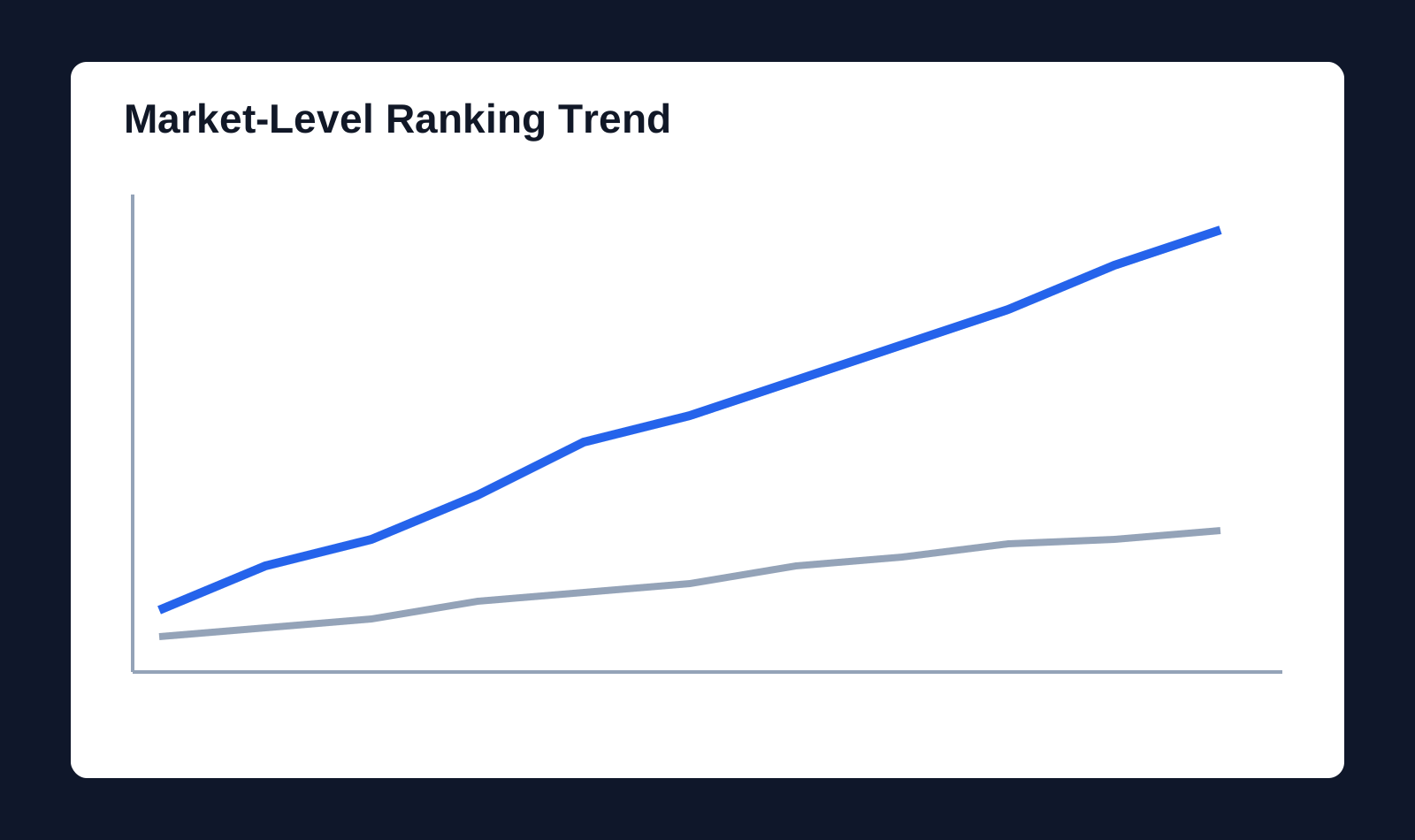
Ranking trend visuals in the sample report are intended to distinguish directional movement from short-term volatility. This matters because local search can fluctuate naturally across markets, and teams need to avoid overreacting to normal noise. The report includes context windows to improve confidence in interpretation and action timing.
Trend views are most useful when paired with service intent segmentation. A global ranking average may hide meaningful opportunity pockets. LocalPulsePro report views maintain market and keyword granularity so teams can prioritize actions where demand and conversion potential are strongest.
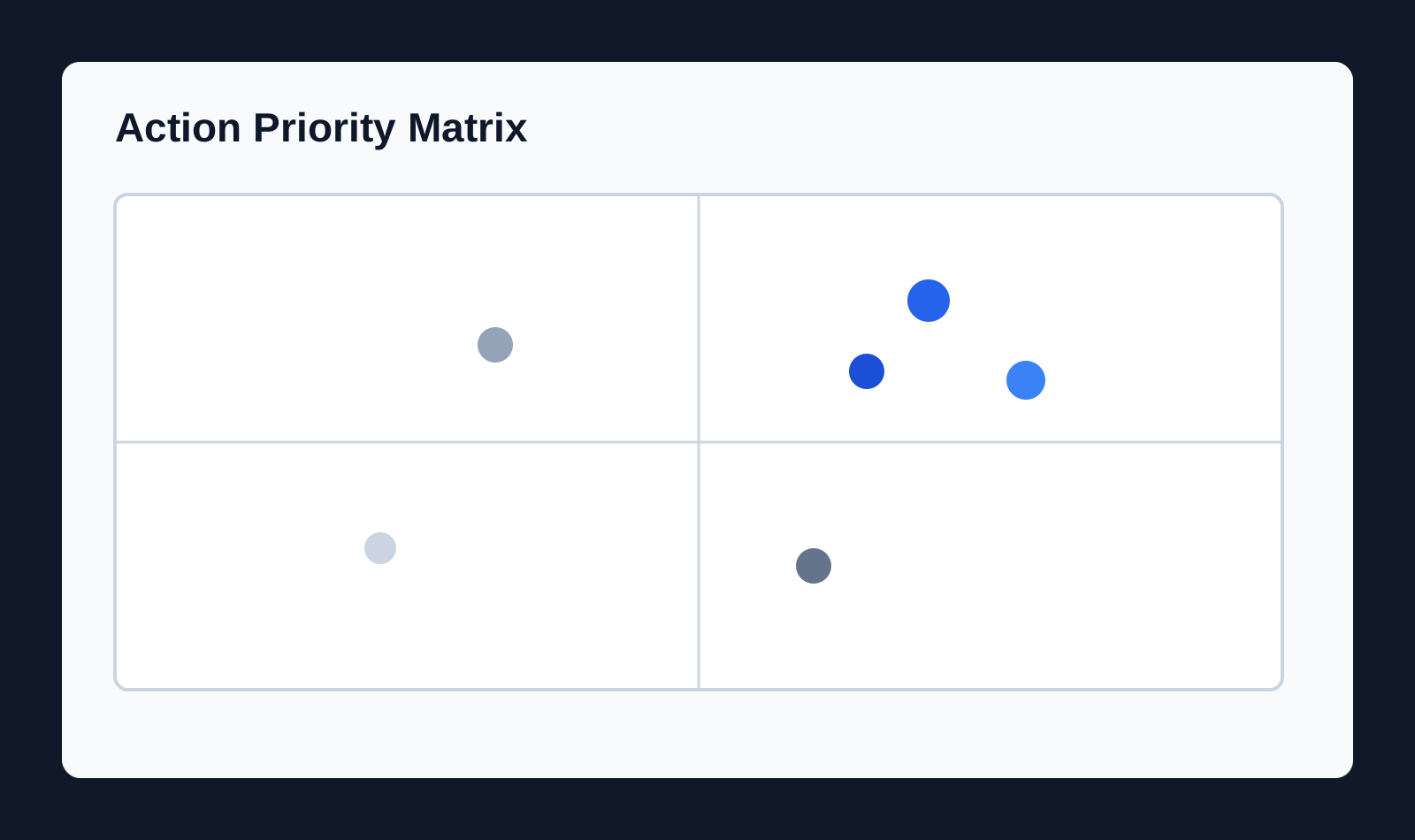
The priority matrix converts diagnosis into execution structure. Actions are grouped by estimated impact, effort, confidence, and verification window. This helps teams assign work rationally instead of defaulting to whichever issue appears first in a raw audit list.
In practice, high-impact and high-confidence actions should be executed first unless dependencies block implementation. Lower-confidence items can still be addressed, but usually in controlled test cycles. This framework improves resource efficiency and reduces rework caused by unclear prioritization logic.
| Field | Meaning | How to Use It |
|---|---|---|
| Visibility Delta | Directional movement versus previous period | Check whether change is consistent across service-intent clusters |
| Volatility Class | Normal vs abnormal ranking fluctuation profile | Prioritize abnormal drops with commercial significance first |
| Constraint Severity | Estimated suppression potential of issue category | Use with effort score for sprint sequencing |
| Trust Signal Health | Review quality and confidence indicator state | Improve review operations where pre-contact confidence is weak |
| Verification Window | Expected timing for measurable response | Avoid premature conclusions before window closes |
What moved: Core service-intent visibility improved in two priority markets while one market showed abnormal decline tied to profile relevance gaps.
Why it moved: Website structure and category alignment improvements likely increased relevance confidence in growing markets; unresolved trust-signal weakness and listing drift likely contributed to the declining market.
What to do next: Execute profile normalization and review-response consistency actions in the declining market while extending proven content structure patterns to adjacent markets.
How to verify: Monitor ranking stability, profile interactions, and conversion-path engagement in the next 30-day window.
Update primary categories, service descriptors, and media quality for affected locations. Owner: Local SEO operator. Expected response window: 2-4 weeks.
Fix crawl/indexation issues impacting high-intent location pages. Owner: Web team. Expected response window: 2-6 weeks depending on deployment cycle.
Improve review response cadence, visible credibility modules, and conversion-path clarity. Owner: Content + operations. Expected response window: 3-6 weeks.
Review post-change signals and adjust priority queue by confidence. Owner: Marketing lead + operator. Expected response window: monthly cycle.
Standardize onboarding diagnostics and client reporting with a repeatable local SEO narrative framework.
Link local visibility movement to lead quality and commercial outcomes leadership can evaluate quickly.
Use priority and verification layers to guide resource allocation and reduce execution bottlenecks.
This page reflects the practical structure used for real local SEO reporting workflows: diagnostics, interpretation, priority, and verification.
Yes. The format is designed for market-level segmentation and can be scaled across multi-location programs.
Yes. Action routing is a core component, including ownership guidance and expected response windows.
Start the free trial and run your first baseline scan. You can then generate comparable report outputs using your own market data.
Start the LocalPulsePro free trial to generate your own market-specific report and move from local SEO diagnostics to execution with confidence.